Organisations & Enterprise
 Government
.png?width=20&height=20&name=icon%20(1).png) Universities
Universities.png?width=20&height=20&name=icon%20(2).png) Associations & Communities
Associations & Communities Increase Employee Engagement
.png?width=20&height=20&name=icon%20(3).png) Reduce Employee Turnover
Reduce Employee Turnover.png?width=20&height=20&name=icon%20(4).png) Provide Leadership Development
Provide Leadership Development.png?width=20&height=20&name=icon%20(5).png) Develop High Potentials
Develop High Potentials.png?width=20&height=20&name=icon%20(6).png) Boost Diversity, Equity & Inclusion
Boost Diversity, Equity & Inclusion.png?width=20&height=20&name=icon%20(7).png) Support Career Development
Support Career Development.png?width=20&height=20&name=icon%20(8).png) Drive Collaboration & Innovation
Drive Collaboration & Innovation.png?width=20&height=20&name=icon%20(9).png) Onboard New Staff & Graduates
Onboard New Staff & Graduates Brancher Mentoring Software
 Strengths & Values Analyzer
 Mentoring Program
 Reverse Mentoring
 Group Mentoring

 Organisations & Enterprise
 Government
.png?width=21&name=icon%20(1).png) Universities
Universities.png?width=21&name=icon%20(2).png) Associations & Communities
Associations & Communities Increase Employee Engagement
.png?width=21&name=icon%20(3).png) Reduce Employee Turnover
Reduce Employee Turnover.png?width=21&name=icon%20(4).png) Provide Leadership Development
Provide Leadership Development.png?width=21&name=icon%20(5).png) Develop High Potentials
Develop High Potentials.png?width=21&name=icon%20(6).png) Boost Diversity, Equity & Inclusion
Boost Diversity, Equity & Inclusion.png?width=21&name=icon%20(7).png) Support Career Development
Support Career Development.png?width=21&name=icon%20(8).png) Drive Collaboration & Innovation
Drive Collaboration & Innovation.png?width=21&name=icon%20(9).png) Onboard New Staff & Graduates
Onboard New Staff & Graduates Mentoring Software
 Strengths & Values Analyzer
 Peer Mentoring
 Reverse Mentoring
 Group Mentoring
 HR Mentoring Program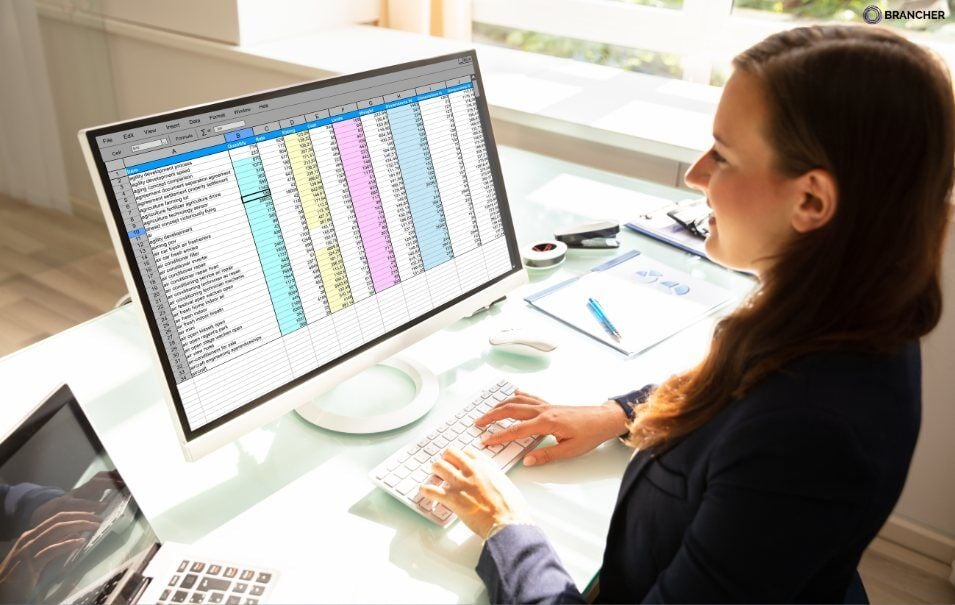
Last Updated: 16 September 2026
Every mentoring program starts somewhere simple. A spreadsheet with names, a column for meeting dates, maybe a shared folder for resources. For a while, that's genuinely enough.
The question worth asking honestly, before spending anything on software, is whether that's still true for your program today. This guide walks through what a spreadsheet handles well, where manual mentoring tends to break down, and how to tell when it's actually time to move on.
Quick Answer
A spreadsheet can genuinely work for a small, single-cohort mentoring program, generally one with a handful of pairs and one administrator who has the time to manually match, chase and report on every relationship. Once a program grows past that, runs more than one stream at a time, or needs to show leadership measurable outcomes rather than anecdotes, the admin load, data reliability and reporting gaps that come with manual tracking tend to compound quickly. At that point, purpose-built mentoring software isn't a nice-to-have upgrade, it's what keeps the program from quietly falling apart.
TL;DR
Spreadsheets are a reasonable starting point for a small, single-cohort mentoring program with one dedicated administrator. The problems tend to show up once a program grows, runs multiple streams, or needs to prove its value to leadership: admin time grows faster than participant numbers, manually maintained data becomes less reliable, every pair gets a different experience, and problems go unnoticed until it's too late to fix them.
Mentoring software doesn't replace the human relationship. It automates the admin around it, matching, reminders, tracking and reporting, so the people running and taking part in the program can focus on the actual mentoring.
Brancher automates matching, admin, and reporting, so program owners spend less time on logistics and more time on outcomes.
Table of Contents
- What a Spreadsheet Can Genuinely Handle Well
- Where Manual Mentoring Starts to Break Down
- What Mentoring Software Actually Solves
- Spreadsheet vs Mentoring Software: Comparison Table
- Signs You're Ready to Move Off Spreadsheets
- How Brancher Helps
- Frequently Asked Questions
What a Spreadsheet Can Genuinely Handle Well
It's worth being honest about this before making the case for software: a spreadsheet isn't automatically the wrong tool. For a small, single-cohort program, one where an administrator personally knows every mentor and mentee, a well-organised spreadsheet can track pairings, log meeting dates and hold basic contact details without much friction.
A spreadsheet tends to be genuinely fine when:
- You're running a pilot with a small handful of pairs
- It's a single cohort running once, with no immediate plans to repeat or scale it
- The administrator has enough time each week to personally follow up with every pair
- You're still testing whether a formal mentoring program is worth investing in at all
If that describes your program, the honest answer is that you probably don't need mentoring software yet. The problems below tend to show up once one or more of those conditions stops being true.
Where Manual Mentoring Starts to Break Down
1. Admin time grows faster than participant numbers
Matching, chasing updates, sending reminders and compiling feedback all have to be done individually without automation. That's manageable for a handful of pairs. As numbers grow, the admin work doesn't grow at the same steady rate, it tends to compound, because more pairs also means more variation in who needs a nudge, who's gone quiet, and who needs a rematch.
2. Manually maintained data gets less reliable as it grows
This isn't unique to mentoring. In one of the most cited reviews of spreadsheet reliability, researcher Raymond Panko examined 13 studies of operational spreadsheets conducted between 1995 and 2004 and found that 94% of the 88 spreadsheets audited contained at least one error, with an average error rate of 5.2% of formula cells.
A mentoring program spreadsheet, updated by multiple people, with statuses changing weekly, isn't immune to that same pattern. Duplicated rows, outdated contact details and version-control confusion tend to accumulate quietly until someone acts on bad information.
3. Every pair gets a different experience
Without a standard process, some mentors are naturally more proactive than others, some pairs get clear guidance and some don't, and new participants have to work out expectations for themselves. Over time, that inconsistency shows up as disengagement, and it's hard to trace back to a single cause because nothing was standardised in the first place.
4. You can't see what's happening until it's too late
A spreadsheet tells you who's paired with whom. It rarely tells you who's actually meeting, who's satisfied, or who's quietly disengaged, unless someone manually chases that information down. Most manual programs end up measuring success once, at the end, by which point a struggling pair has usually already stopped meeting.
5. Communication has no single home
Mentors and mentees typically default to personal email or whatever messaging tool they already use. Scheduling conflicts multiply without a shared calendar system, and resources get lost if there's no central place to find them. None of this is anyone's fault, it's just what happens when a program has no dedicated system to run through.
None of these problems are really about spreadsheets being a bad tool. They're about what happens when a tool built for storing static information gets asked to run something that changes weekly, at a scale where one person can no longer track every detail personally.
What Mentoring Software Actually Solves
1. Matching that doesn't rely on gut feel
Rather than pairing people based on who's available or who an admin happens to know, structured matching applies the same criteria (skills, goals, personality, values and availability) consistently to every pair. For a full breakdown of how manual and software-based matching compare on cost, time and outcomes specifically, see our guide to manual vs software matching.
It's also worth noting that formal, structured mentoring tends to outperform informal arrangements on the outcomes that matter most to participants. Gallup's research found that employees with a formal mentor are 75% more likely, and those with a formal sponsor 97% more likely, to strongly agree their organisation provides a clear career development plan, compared with employees relying on informal relationships. Software is what makes running a genuinely formal, structured program practical at any scale beyond a handful of pairs.
2. Signups, profiles and onboarding in one place
Participants register once, enter their own skills, goals and preferences, and administrators can see everyone's status without digging through scattered files. Profiles stay current because participants update them directly, rather than an admin manually re-keying changes.
3. Visibility while the program is actually running
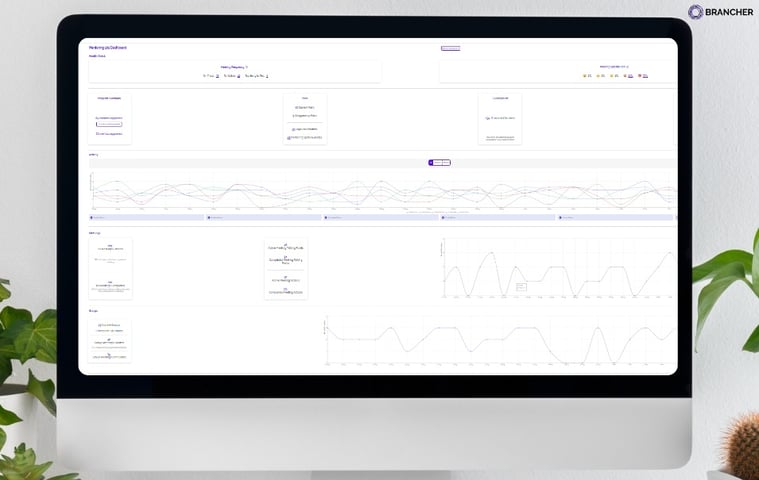
Built-in check-ins, meeting logs and satisfaction tracking mean administrators can see engagement levels as the program runs, not just at the end. That's the difference between catching a struggling pair in week four and finding out in the closing survey that it fell apart in week two.
4. Reporting that doesn't need to be assembled by hand
Analytics and dashboards turn raw activity into something that can be handed to a sponsor: participation rates, meeting frequency, goal progress and engagement trends over time, without a manual export-and-format exercise every time someone asks how the program is going.
Spreadsheet vs Mentoring Software: Comparison Table
| Factor | Spreadsheet / Manual | Mentoring Software |
|---|---|---|
| Matching | Based on admin judgement or self-selection, workable for a handful of pairs, harder to keep consistent at volume | Structured criteria applied consistently to every pair |
| Admin time | Grows roughly in line with participant numbers, plus the variation between them | Automated reminders, enrolment and reporting reduce manual admin work |
| Data reliability | Manually entered and updated across multiple people; general spreadsheet research points to meaningful error rates at scale<sup>1</sup> | Centralised, structured data with fewer manual entry points |
| Visibility mid-program | Usually limited to occasional manual check-ins | Live dashboards showing meeting frequency, satisfaction and goal progress |
| Reporting to leadership | Manually compiled from surveys and exports | Exportable, real-time reporting linking activity to outcomes |
| Best suited to | A single, small cohort with one dedicated administrator | Multiple concurrent programs, larger cohorts, or any program that needs to prove ROI |
Signs You're Ready to Move Off Spreadsheets
- Your program has grown past the point where one administrator can personally track every pair. Many programs notice this somewhere between 15 and 30 active pairs, though it varies by how much time the admin actually has and how complex the matching criteria are.
- You're running, or planning to run, more than one mentoring stream at once (onboarding, leadership, DEI, reverse mentoring)
- Matches are increasingly based on who's available rather than who's actually a good fit
- Leadership is asking for evidence the program is working, not just anecdotes
- You're spending more time chasing updates than supporting the relationships themselves
If two or more of these are true, the cost of staying manual is probably higher than the cost of switching, even before accounting for the time already being lost. For a fuller look at putting a number on that, see our ROI of mentoring guide and ROI calculator.
How Brancher Helps
Brancher replaces the spreadsheet-and-email approach with a self-service platform that handles matching, onboarding, engagement and reporting in one place.
Matching runs on personality, values, skills and goals rather than manual judgement, with admin-led, participant-led or hybrid options depending on how much control you want to keep. Participants get built-in training, goal-setting tools and automated nudges, with optional 24/7 support through Ava AI between formal sessions. Program administrators have reported cutting admin time by more than 80% after moving off manual processes, largely from automating the enrolment, reminder and reporting work a spreadsheet leaves entirely to a human.
If you want to see whether a move away from spreadsheets is worth it for your program specifically, start your free trial or use the ROI calculator to estimate the time and cost involved for your own numbers.
Frequently Asked Questions
Do we even need mentoring software, or can we run this in spreadsheets?
For a small, single-cohort pilot with one administrator who has time to manage it personally, a spreadsheet can work. Once a program grows past that, runs multiple streams, or needs to report measurable outcomes to leadership, the admin load and data reliability issues that come with manual tracking tend to outweigh the cost of purpose-built software.
What are the biggest risks of running a mentoring program on spreadsheets?
The main risks are admin time that grows faster than participant numbers, data that becomes less reliable as more people update it manually, an inconsistent experience between pairs, and no visibility into how the program is actually going until an end-of-program survey, by which point struggling pairs have usually already disengaged.
How do you know when it's time to move from spreadsheets to mentoring software?
Common signs include growing past the point where one administrator can personally track every pair, running more than one mentoring stream at once, matches increasingly based on availability rather than fit, and leadership asking for evidence the program works rather than anecdotes.
Does mentoring software replace the human side of mentoring?
No. Software automates the admin around a mentoring relationship, matching, scheduling, reminders and tracking, not the actual conversations. The aim is to remove the logistical load so mentors and mentees can focus on the relationship itself.
How much time does mentoring software actually save?
This varies by program size and how manual the current process is, but Brancher customers have reported admin time reductions of more than 80% after moving off spreadsheets and manual processes. Use the ROI calculator to estimate the figure for your own program.
Sources
- Panko, R., research review of spreadsheet error rates across 13 studies (1995 to 2004), as summarised in the European Spreadsheets Risk Interest Group literature. eusprig.org
- Gallup, Mentors and Sponsors Make the Difference (2023), based on a March 2022 Gallup Panel survey of 8,198 US employees. gallup.com
Author Bio
Holly Brailsford is the Co-Founder and CEO of Brancher, and a registered organisational psychologist specialising in workplace mentoring design.