Organisations & Enterprise
 Government
.png?width=20&height=20&name=icon%20(1).png) Universities
Universities.png?width=20&height=20&name=icon%20(2).png) Associations & Communities
Associations & Communities Increase Employee Engagement
.png?width=20&height=20&name=icon%20(3).png) Reduce Employee Turnover
Reduce Employee Turnover.png?width=20&height=20&name=icon%20(4).png) Provide Leadership Development
Provide Leadership Development.png?width=20&height=20&name=icon%20(5).png) Develop High Potentials
Develop High Potentials.png?width=20&height=20&name=icon%20(6).png) Boost Diversity, Equity & Inclusion
Boost Diversity, Equity & Inclusion.png?width=20&height=20&name=icon%20(7).png) Support Career Development
Support Career Development.png?width=20&height=20&name=icon%20(8).png) Drive Collaboration & Innovation
Drive Collaboration & Innovation.png?width=20&height=20&name=icon%20(9).png) Onboard New Staff & Graduates
Onboard New Staff & Graduates Brancher Mentoring Software
 Strengths & Values Analyzer
 Mentoring Program
 Reverse Mentoring
 Group Mentoring

 Organisations & Enterprise
 Government
.png?width=21&name=icon%20(1).png) Universities
Universities.png?width=21&name=icon%20(2).png) Associations & Communities
Associations & Communities Increase Employee Engagement
.png?width=21&name=icon%20(3).png) Reduce Employee Turnover
Reduce Employee Turnover.png?width=21&name=icon%20(4).png) Provide Leadership Development
Provide Leadership Development.png?width=21&name=icon%20(5).png) Develop High Potentials
Develop High Potentials.png?width=21&name=icon%20(6).png) Boost Diversity, Equity & Inclusion
Boost Diversity, Equity & Inclusion.png?width=21&name=icon%20(7).png) Support Career Development
Support Career Development.png?width=21&name=icon%20(8).png) Drive Collaboration & Innovation
Drive Collaboration & Innovation.png?width=21&name=icon%20(9).png) Onboard New Staff & Graduates
Onboard New Staff & Graduates Mentoring Software
 Strengths & Values Analyzer
 Peer Mentoring
 Reverse Mentoring
 Group Mentoring
 HR Mentoring Program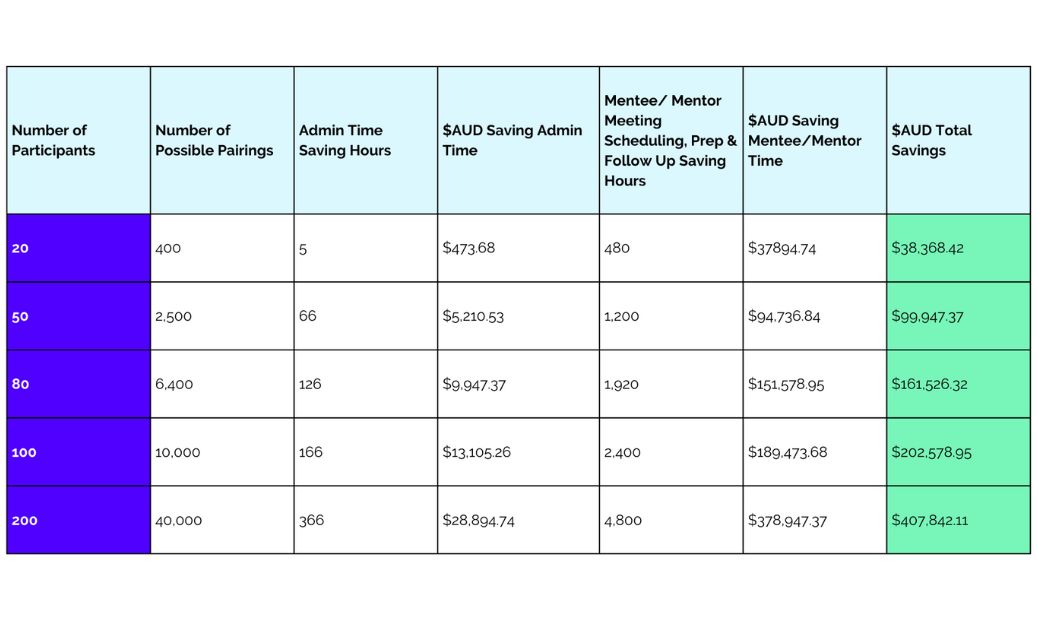
Discover when to use mentoring software, its benefits, and how to scale mentoring without admin chaos.
You’ve got mentoring on your radar (maybe even a spreadsheet or two tracking pairings) but here’s the truth:
If you're still juggling manual admin, scattered emails, or a “set and forget” program, it's already time to ask when should you use mentoring software.
The answer isn’t “someday.” It’s when things stop scaling.
If you’re serious about capability uplift, leadership development, or retention, software is no longer optional. And the data backs it.
📚 A 2024 review of mentoring software in education published via arXiv confirms that digital platforms significantly improve mentor-mentee engagement, retention, and learning outcomes, especially in multi-stream or cross-institutional programs.
Table of Contents
- 7 Signs You’re Ready to Adopt Mentoring Software
- 1. You're Managing More Than 15 Pairs
- 2. Stakeholders Want ROI (Not Just Stories)
- 3. You’re Running Multiple Programs
- 4. Matching Is Based on Guesswork
- 5. Admin Is Taking Over Your Job
- 6. You Need Fast, Accurate Reporting
- 7. You Want a Mentoring Culture, Not Just a Program
- How to Choose Mentoring Software Without Wasting Months
- Bottom Line: Stop Asking, Start Acting
- Frequently Asked Questions
7 Signs You’re Ready to Adopt Mentoring Software
1. You're Managing More Than 15 Pairs
Manual matching works for a pilot. But once you’ve got more than 15 mentees, you're spending hours chasing progress instead of creating it.
Warning signs:
-
You rely on spreadsheets and emails to manage sessions
-
Matching decisions are rushed or inconsistent
-
Reporting progress is manual (or not happening at all)
This is one of the most common questions: is it time to scale your mentoring program - and we give you a guide on how to start scaling from small pilot to multi-cohort impact.
2. Stakeholders Want ROI (Not Just Stories)
When leadership starts asking for proof, gut feel won’t cut it.
With software, you can report:
-
Mentor/mentee engagement rates
-
Goal completion and progress
-
Capability uplift across cohorts
💡 According to McKinsey’s 2023 report on L&D tech, organisations using purpose-built platforms for coaching and mentoring were 63% more likely to measure impact in real time.
Read our guide on understanding the ROI of mentoring to make your business case airtight.
3. You’re Running Multiple Programs
Graduate mentoring, leadership pathways, reverse mentoring — they all have different workflows.
Without software:
-
Each stream gets run differently
-
Experiences are inconsistent
-
Scaling requires more headcount
With software: Templates, automation, and tailored workflows let you run multiple programs without doubling your workload.
4. Matching Is Based on Guesswork
Manual matching often comes down to “who’s available,” not “who’s right.”
Mentoring software advantages:
-
Profile logic and skill tagging
-
Goals, interests, and availability aligned
-
Admin gets control without losing flexibility
Better matches = stronger conversations = better outcomes.
👤 Sarah Vandersee, DDG Corporate, Queensland Government Department of Tourism and Sport
“The platform is absolutely fantastic. I think the Brancher platform should be rolled out in other areas of Government. The platform has been quick and easy, and maintained program engagement.”
5. Admin Is Taking Over Your Job
If you’re spending your week nudging participants, logging sessions, and chasing feedback, you’ve become a human help desk.
With mentoring software:
-
Reminders are automated
-
Sessions are logged
-
Progress is tracked
That means less admin, more strategy.
👤 Michelle, Manager in Australian Government Administration
“The algorithm and matching process was excellent. Our whole cohort was happy with their mentor or mentee.”
Manual vs Software-Driven Mentoring
| Task | Manual Mentoring | Mentoring Software |
|---|---|---|
| Matching | Gut feel, spreadsheets | Profile-based logic, custom rules |
| Session Reminders | Manually sent emails | Automated nudges and scheduling |
| Goal Tracking | Inconsistent, manual follow-up | Built-in goal-setting and tracking |
| Reporting | Surveys and Excel exports | Real-time dashboards, exportable data |
| Participant Experience | Inconsistent | Seamless and self-guided |
| Program Scalability | Breaks after 15–20 users | Easily supports 100s+ across streams |
This is where mentor software advantages show up in black and white.
6. You Need Fast, Accurate Reporting
The exec sponsor asks, “How’s the mentoring program going?”
You don’t have five days to pull a slide deck together.
Mentoring platforms deliver:
-
Instant dashboards
-
Goal and engagement metrics
-
Stakeholder-ready exports
A 2023 Deloitte HR Tech Trends report confirms that real-time insights and people analytics are now baseline expectations — not nice-to-haves.
7. You Want a Mentoring Culture, Not Just a Program
A mentoring culture means mentoring happens by default, not just in HR-led initiatives.
Mentoring software supports:
-
Always-on mentoring across levels
-
Self-matching or guided enrolment
-
Visibility for all cohorts in one place
That’s how you embed mentoring into the way your organisation grows. Learn more in our mentoring best practices guide.
.png?width=1489&height=745&name=Hubspot%20blog%20-%20banner%20(1).png)
A program with less than 15 people could be manageable to facilitate manually. However, as soon as you start getting above 30 participants (15+ pairs), it becomes overly time consuming and difficult.
A program with 120 participants (approximately 60 pairs), would save over $143,000 in time saved by admins and mentees/mentors by using mentoring software.
Once you get over 50 participants, it becomes almost impossible to match mentees and mentors well.
The more people you have in a mentoring program, the better chance you have of finding mentees an ideal mentor, however the more difficult it becomes to manage the pairing process.
Download Brancher's free time and cost saving calculator.
How to Choose Mentoring Software Without Wasting Months
Don’t get lost in feature comparisons. Focus on what actually drives results.
Look for platforms that:
-
Are purpose-built for mentoring (not generic HR tools)
-
Offer advanced matching logic and admin control
-
Provide real-time reporting and dashboards
-
Scale with your programs as they grow
-
Meet compliance and accessibility requirements
Need a shortcut?
Check out our Top 10 Mentoring Software guide - no fluff, just practical comparisons that help you choose fast.
Bottom Line: Stop Asking, Start Acting
So, when should you use mentoring software? When you're done wasting time. When your program is growing. When outcomes matter.
Because the longer you delay, the more value and people you lose.
Frequently Asked Questions
When should you use mentoring software?
Use mentoring software once you’re managing 15+ pairs, running multiple streams, or needing real-time reporting. If mentoring is strategic, software is essential.
What are the benefits of e‑mentoring platforms?
You get automated workflows, smarter matching, consistent delivery, and clear ROI. That’s how you scale without burning out your team.
How does mentoring software improve matching?
It aligns mentors and mentees based on skills, goals, and preferences - not just who’s available. Better matches = better results.
When is the right time to adopt mentoring tools?
When manual processes slow you down or impact experience. Most orgs hit this point between 15–30 active pairs or when scaling across business units.